
Publications
Enjoy the last publications from Diabetes Institute Teams
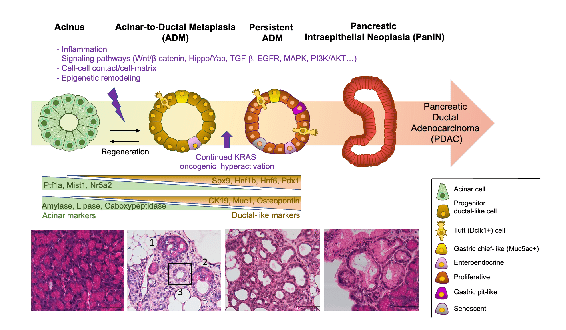
A new article from Cécile Haumaitre and collaborators discusses the origin of pancreatic lesions associated with pancreatic cancer
Pancreatic ductal adenocarcinoma is currently the fourth leading cause of cancer death worldwide. It is projected to become the second leading cause of cancer death by 2030. Unfortunately, PDAC is often diagnosed at an advanced stage, resulting in a 5-year survival rate of less than 10%. Since the most common precancerous lesions of PDAC are currently not clinically detectable, understanding the mechanisms that lead to their formation and progression is crucial to enabling early diagnosis and more effective therapeutic intervention. Lire la suite A new article from Cécile Haumaitre and collaborators discusses the origin of pancreatic lesions associated with pancreatic cancer
Discovery of new rare genetic forms of obesity
This study, from Ralf Jockers and Julie Dam’s team as part of a European network for the prevention of childhood obesity, OBELISK,defines impaired GLP1R cell surface expression as a risk factor for traits associated with type 2 diabetes and obesity and provides potential treatment options for GLP1R LoF variant carriers. Lire la suite Discovery of new rare genetic forms of obesity
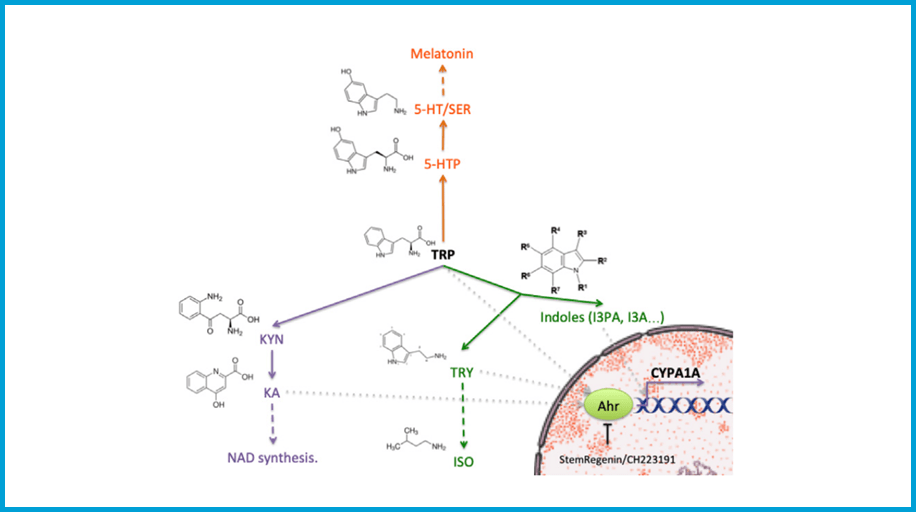
Tryptophan metabolism promotes immune evasion in human pancreatic β cells
A collaborative work between the teams of R Mallone and R Scharfmann leaded by L Rachdi indicate that TRP could induce immune tolerance to β cells by promoting their immune evasion through HLA-I downregulation and PD-L1 upregulation. Lire la suite Tryptophan metabolism promotes immune evasion in human pancreatic β cells
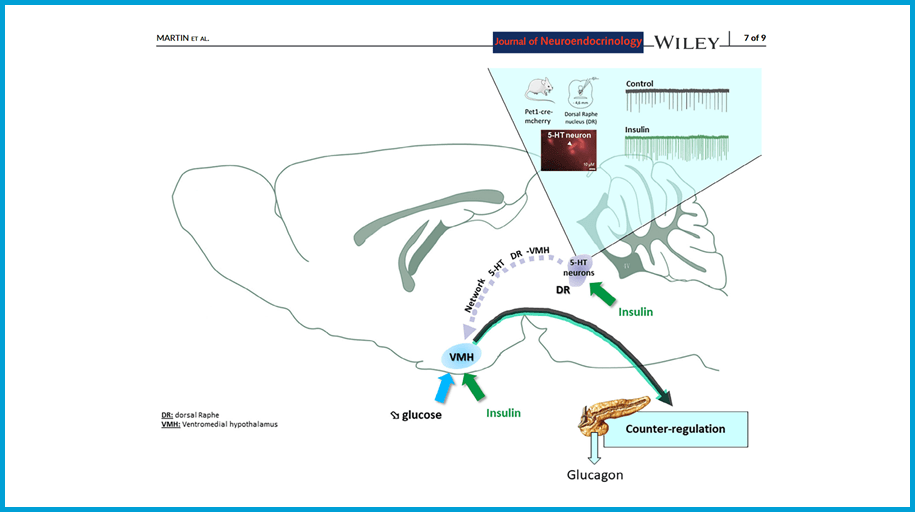
Serotonergic neurons are involved in the counter-regulatoryresponse to hypoglycemia
Christophe Magnan and Céline Cruciani-Guglielmacci in collaboration with the team of Xavier Fioramonti highlight a new neuronal network involved in the regulation of the counter-regulatory response In particular, this study shows that DR 5-HT neurons detect iatrogenic hypoglycemia in response to the increased insulin level and may play an important role in this regulation. Lire la suite Serotonergic neurons are involved in the counter-regulatoryresponse to hypoglycemia
New review from IMMEDIAB
Here, we propose that a significant proportion of individuals may harbor an immune profile that renders them susceptible to developing T2D. We note the heterogeneity of circulating monocytes and tissue macrophages in organs that are key to metabolic disorders such as liver, white adipose tissue (WAT), and endocrine pancreas, as well as their contribution to T2D genesis. Lire la suite New review from IMMEDIAB
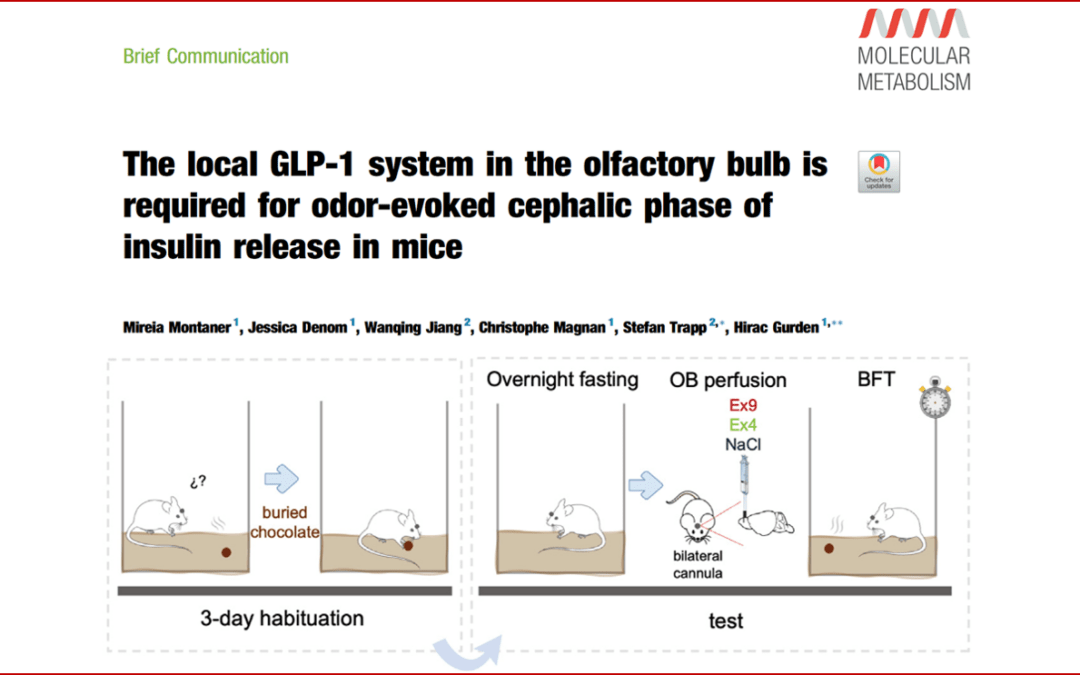
The local GLP-1 system in the olfactory bulb is required for odor-evoked cephalic phase of insulin release in mice
Mireia Montaner, Jessica Denom, Wanqing Jiang, Christophe Magnan, Stefan Trapp, Hirac Gurden from the team “Regulation of Glycemia by Central Nervous System” demonstrate that importance of GLP-1/GLP1-R in the olfactory bulbs Lire la suite The local GLP-1 system in the olfactory bulb is required for odor-evoked cephalic phase of insulin release in mice
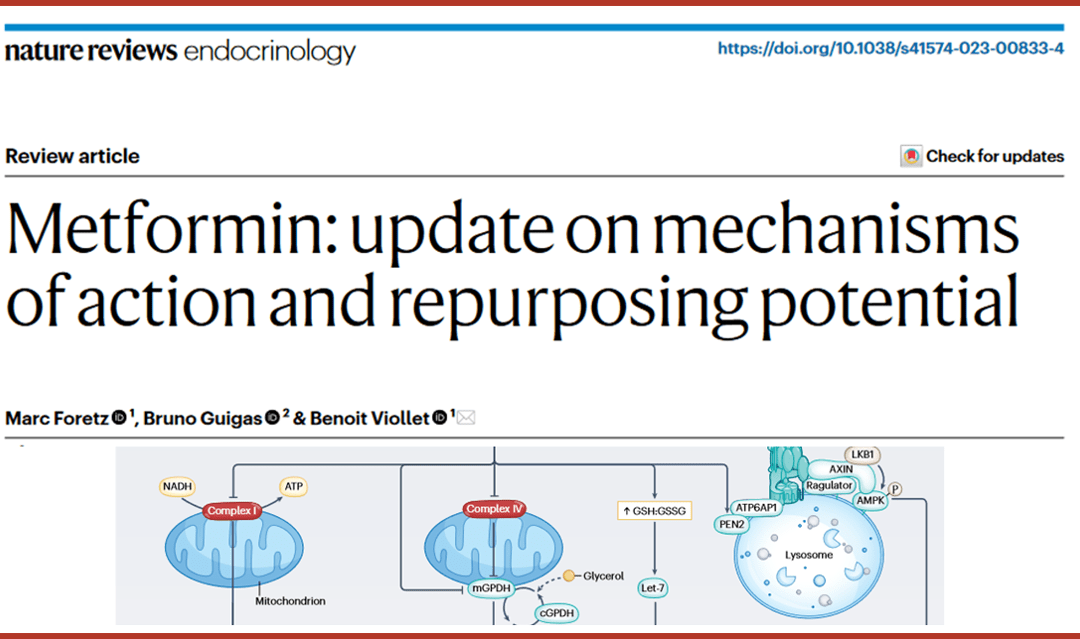
Metformin: update on mechanisms of action and repurposing potential
by Marc Foretz, Bruno Guigas & Benoit Viollet, Lire la suite Metformin: update on mechanisms of action and repurposing potential

Mice with humanized livers reveal the role of hepatocyte clocks in rhythmic behavior
To explore whether peripheral organ circadian clocks may affect the central pacemaker, Anne-Sophie Delbes et al. used a chimeric model in which mouse hepatocytes were replaced by human hepatocytes. Liver humanization led to reprogrammed diurnal gene expression and advanced the phase of the liver circadian clock that extended to muscle and the entire rhythmic physiology Lire la suite Mice with humanized livers reveal the role of hepatocyte clocks in rhythmic behavior
New Review from Postic lab
Abstract Excessive sugar consumption and defective glucose sensing by hepatocytes contribute to the development of metabolic diseases including type 2 diabetes mellitus (T2DM) and nonalcoholic fatty liver disease (NAFLD). Hepatic...
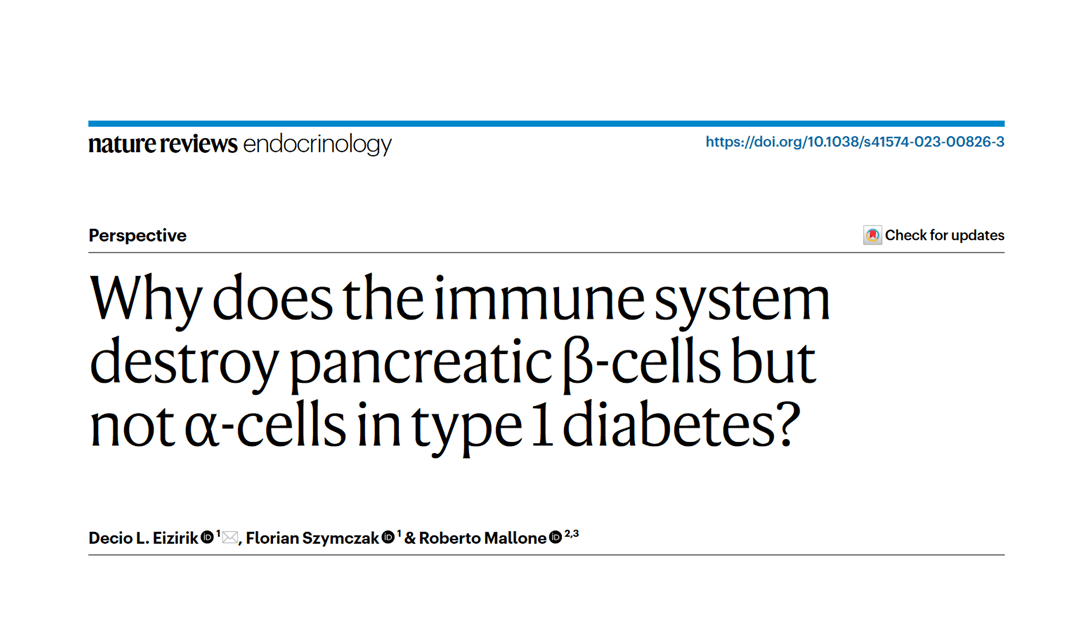
A review from Mallone Team in nature reviews endocrinology
A perplexing feature of type 1 diabetes (T1D) is that the immune system destroys pancreatic β-cells but not neighbouring α-cells, even though both β-cells and α-cells are dysfunctional. Dysfunction, however, progresses to death only for β-cells. Recent findings indicate important differences between these two cell types. Lire la suite A review from Mallone Team in nature reviews endocrinology

Collaborative work of REGLYS Team
Innate immune mediators of pathogen clearance, including the secreted C-type lectins REG3 of the antimicrobial peptide (AMP) family, are known to be involved in the regulation of tissue repair and homeostasis. Their role in metabolic homeostasis remains unknown. Here the authors show that… Lire la suite Collaborative work of REGLYS Team
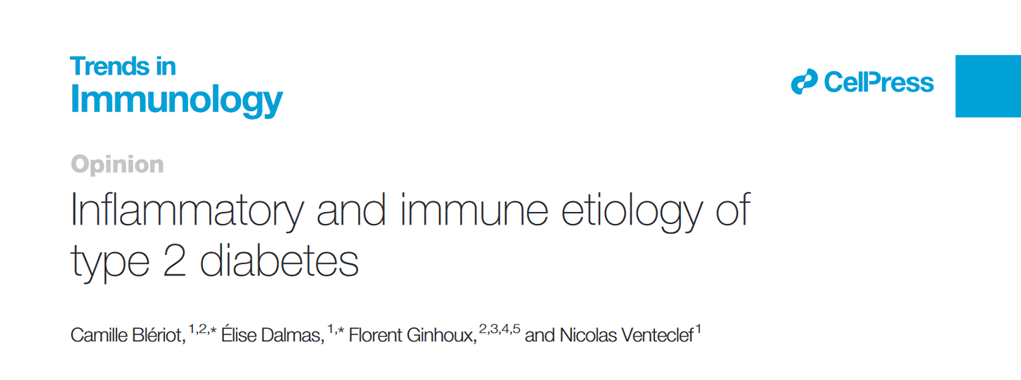
New review from IMMEDIAB Team
Type 2 diabetes (T2D) represents a global threat affecting millions of patients worldwide. However, its causes remain incompletely dissected and we lack the tools to predict which individuals will develop T2D.. Here, the authors propose that a significant proportion of individuals may harbor an immune profile that renders them susceptible to developing T2D. W Lire la suite New review from IMMEDIAB Team